


Informations pratiques
Résumé de l'actualité
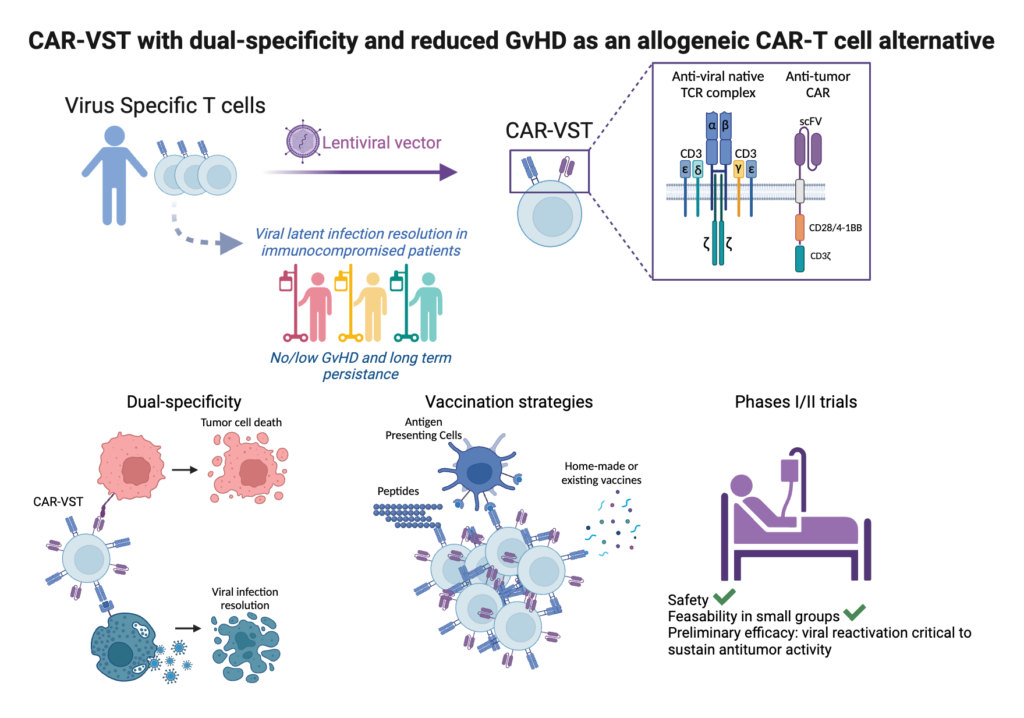
Congratulations to Valentine WANG, who defended her thesis titled « Improving Allogeneic CAR-T cells: HLA class I KO Virus Specific T cells to limit graft versus host disease and graft rejection » on December 17, 2024
CAR-T cell therapy has transformed cancer treatment by engineering patient T cells to target tumor antigens, achieving success in B-cell malignancies. However, this approach is costly and time-intensive, requiring patient-derived cells, which may be limited by prior treatments or disease progression. Allogeneic CAR-T cells from healthy donors offer a more scalable solution, though their risk of graft-versus-host disease (GvHD). To address these limitations, we combined CAR technology with Virus Specific T cells (VSTs), known for antiviral capacity and low GvHD, to create CAR-VSTs as a dual-target therapy for tumor relapse and viral reactivation. We generated CAR-Ts and CAR-VSTs with similar CD19.CAR expression (40.28%±9.30% and 35.96%±11.40%, respectively, on day 7) and comparable in vitro tumor lysis (74.13%±22.06%) in CD19+ cells. In a murine model, both controlled tumor growth and improved survival, while CAR-VSTs maintained antiviral functionality with 62.32%±13.84% lysis of virus-peptide-pulsed cells. CAR-VSTs also showed reduced alloreactivity (28.27%±21.64% proliferation vs. 88.3%±24.48% in CAR-Ts, p=0.0285), suggesting lower GvHD risk. In collaboration with UNC, we deleted HLA class I in CAR-VSTs by targeting β-2-microglobulin and explored overexpressing HLA-E/G to prevent NK cell lysis. Post-knockout, HLA-ABC expression dropped to 15.1±14.6%. In conclusion, generating HLA-E+ or G+/B2M–/CAR-VSTs offers a promising alternative for creating fully allogeneic cells. These modified CAR-VSTs retain their dual antiviral and antitumor functions, making them a promising candidate for « off-the-shelf » immunotherapies that could reduce the risks of immune rejection and graft-versus-host disease.
Autres actualités
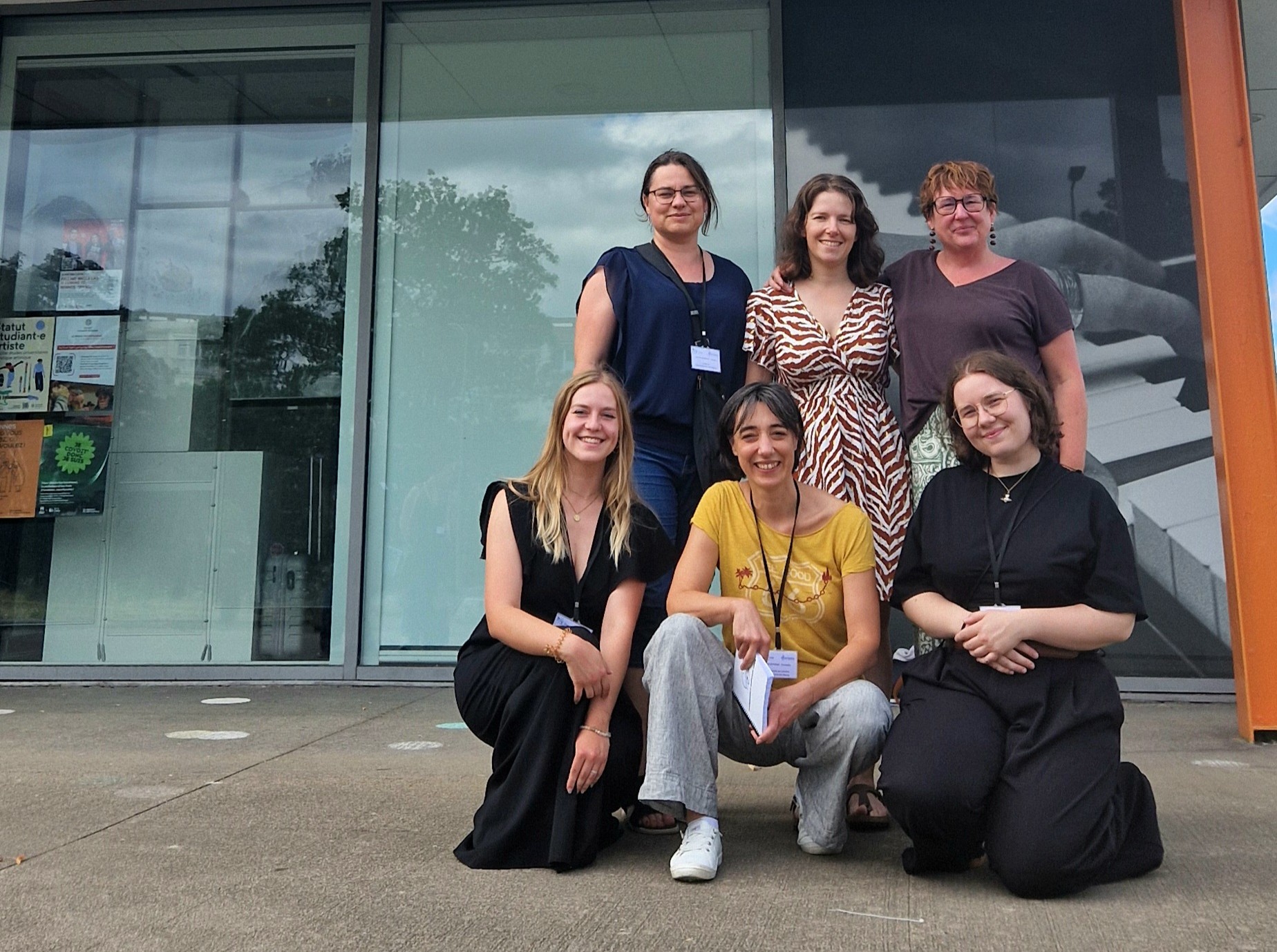
6️⃣ membres de IMoPA présentes au 14ᵉ congrès sifrARN à Rennes !
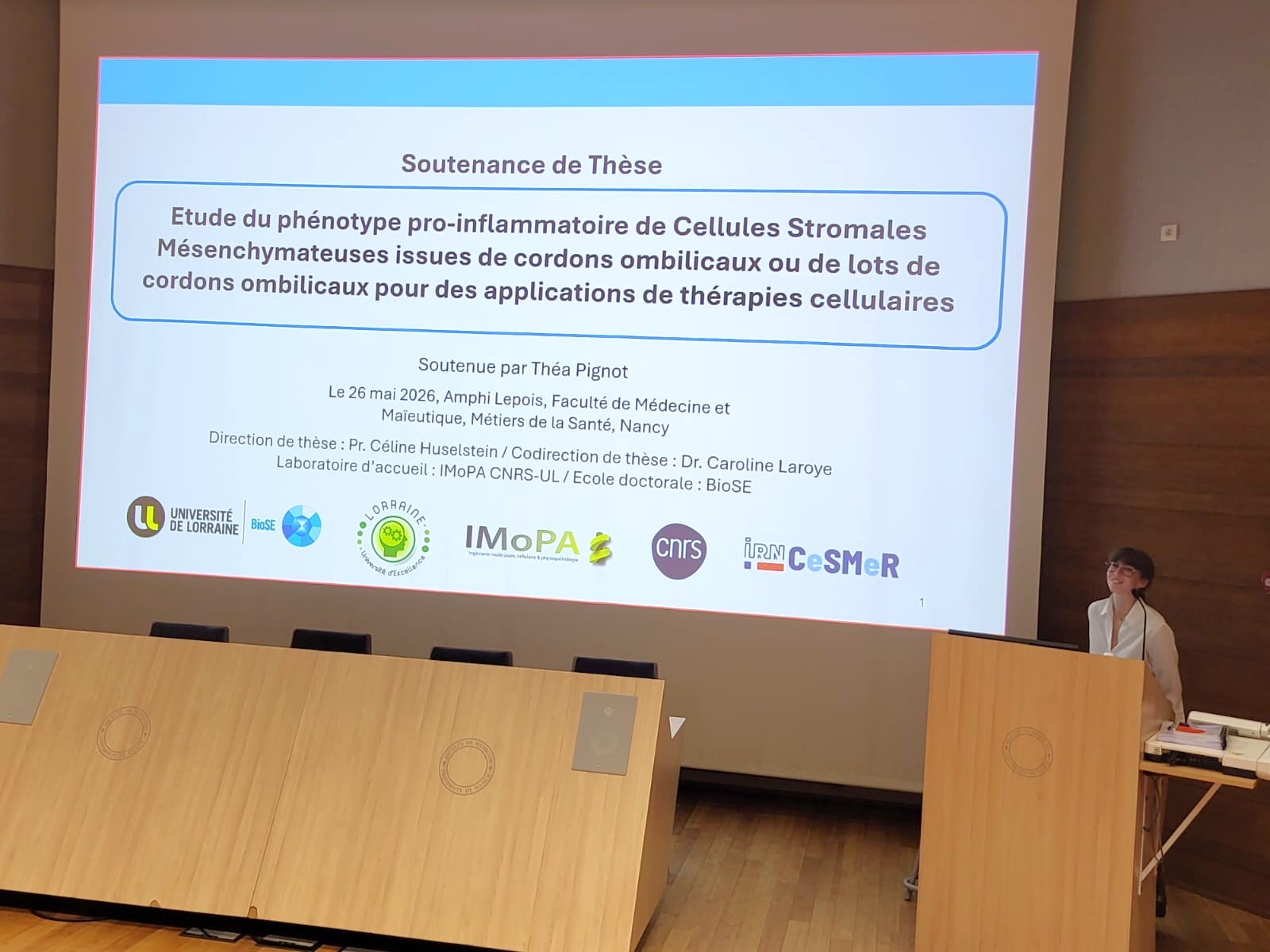
🎓 Soutenance de thèse : Félicitations à Théa Pignot !